
What Is Emergency Responder Radio Coverage?
Emergency responder radio coverage is the ability of firefighters, police and EMS to communicate by radio anywhere inside a building. Public safety agencies operate on dedicated radio frequencies, and those signals often weaken or fail inside large or complex structures.
Reinforced concrete, metal framing, low-E glass and below-grade construction all block or absorb radio signals. Basements, stairwells, elevator lobbies, mechanical rooms and parking garages are where coverage most often fails, and those are some of the places responders need it most. That’s why most fire codes, including IFC Section 510, require buildings to pass a radio coverage test, often called RF grid testing.
When a building fails, an Emergency Responder Communication Enhancement System (ERCES), also known as an ERRCS, restores coverage. It captures the outside public safety signal, boosts it, and distributes it through the building in both directions, so responders can hear dispatch and dispatch can hear them.
A typical ERCES installation includes:
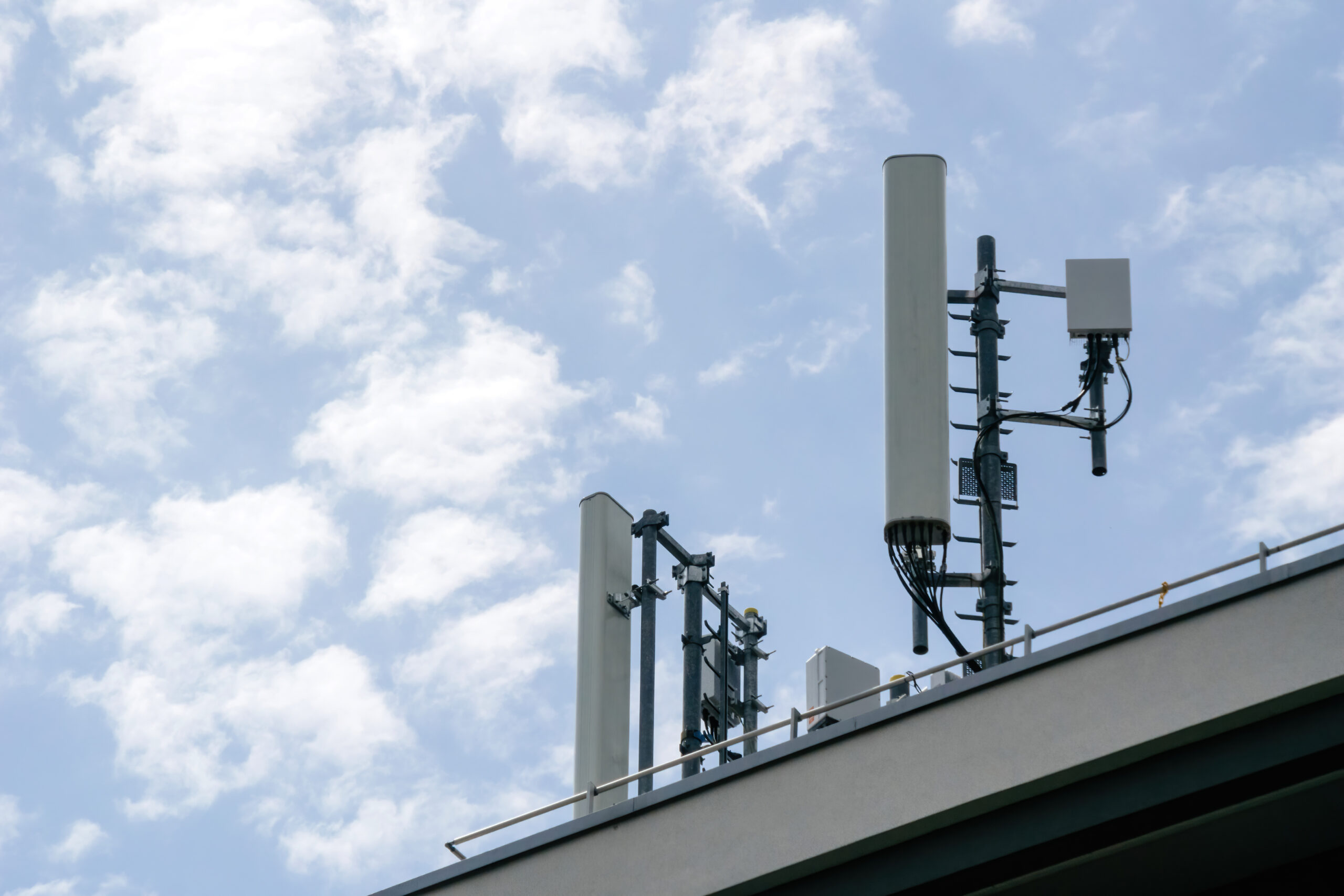
- Donor antenna: mounted on the roof and aimed at the nearest public safety radio site
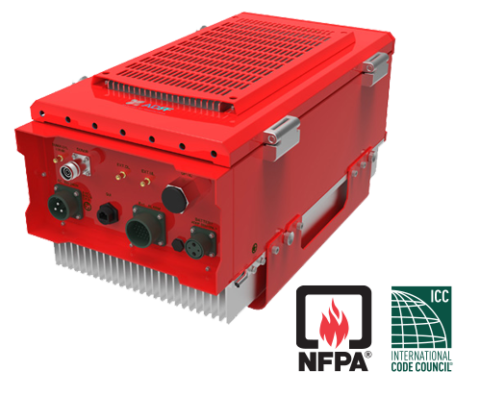
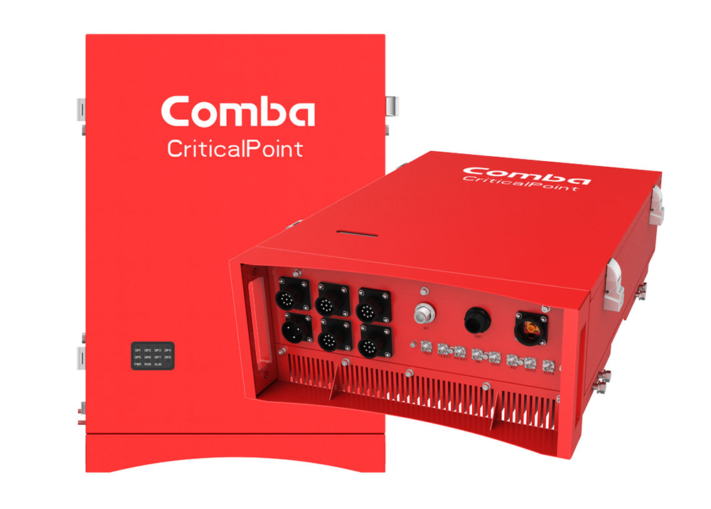
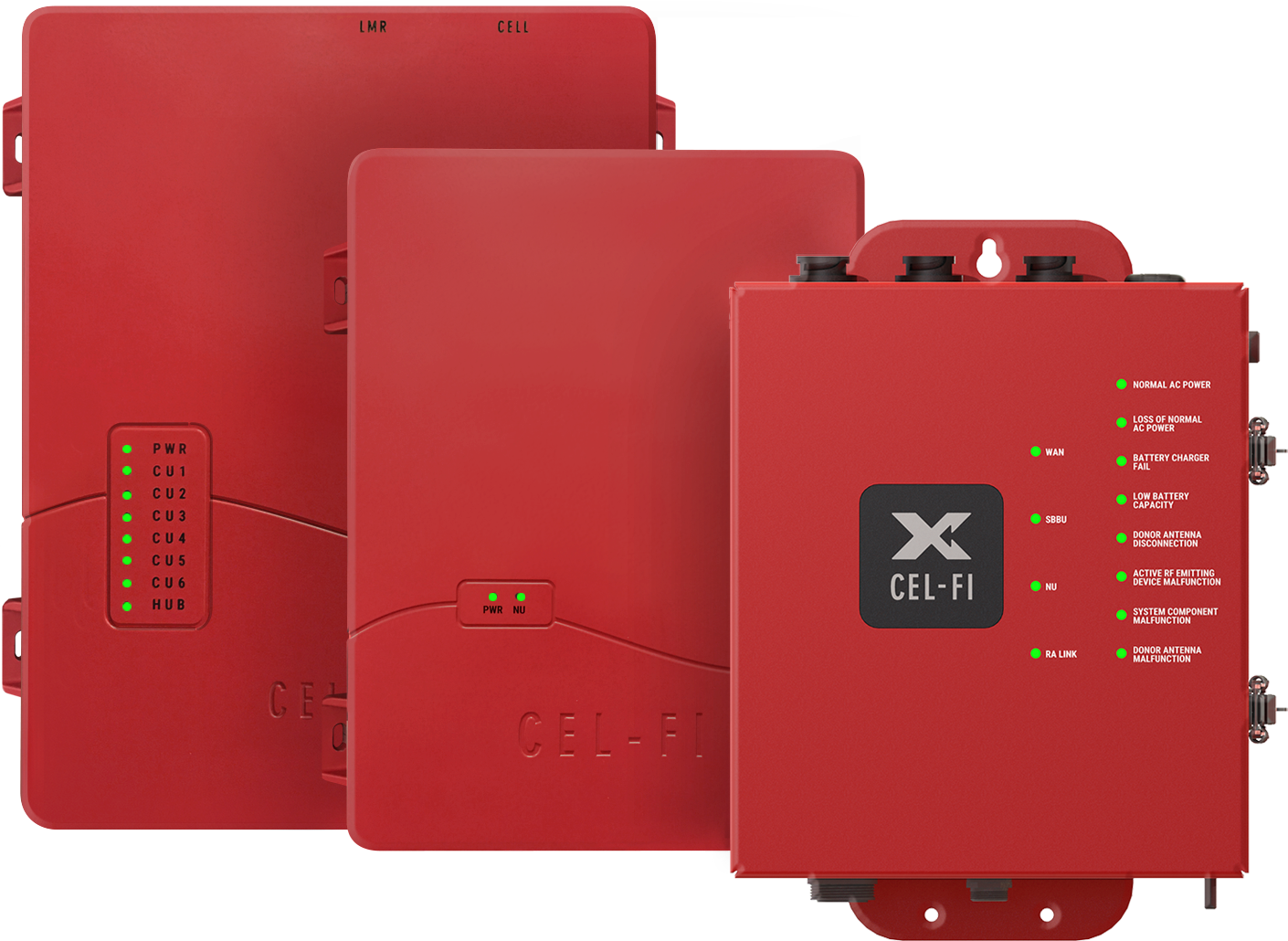
- Bi-directional amplifier (BDA): boosts signals coming into and going out of the building
- Distributed antenna system (DAS): cabling and indoor antennas that carry the signal to every floor
- Backup power: batteries that keep the system running during a power outage
- Monitoring: connections that report system faults to the fire alarm control panel
A properly designed ERCES gives first responders reliable two-way radio coverage throughout the building and helps you pass fire marshal inspection.
How ERCES Systems Improve Emergency Response
When first responders can communicate anywhere in a building, they work faster and safer. A properly installed ERCES delivers three key benefits:
Improved coordination: Fire, EMS and police teams working on different floors stay connected and can share updates as conditions change.
Enhanced responder safety: Coverage in stairwells, basements and mechanical rooms means responders can call for help or report hazards from areas where radios would otherwise fail.
Faster incident response: Clear two-way radio lets teams relay information, request resources and make decisions without delays.
Our ERCES Installation Approach
1. RF Grid Test
Measure your building’s radio or cellular coverage
2. Design
Our trained RF designers will create a compliant design to address any lapse in coverage
3. Permit
Our permitting department handles the submission for a seamless approval process
4. Install
Our FCC GROL/ NICET certified installers will deploy, commission, optimize and test the system for full compliance
5. Certification
Final acceptance and testing with the AHJ to receive your certification of occupancy

Code Requirements for ERCES Systems
Most U.S. jurisdictions require buildings to provide reliable radio coverage for firefighters, police and EMS. These rules come mainly from Section 510 of the International Fire Code (IFC) and NFPA 1225, which local fire departments adopt and often amend. Texas, for example, doesn’t adopt a fire code statewide, so each city adopts and amends its own. If a building fails its radio coverage test, an ERCES must be installed before a Certificate of Occupancy is issued.
Requirements vary by jurisdiction, but a benchmark coverage test is commonly required for:
- High-rise and multi-story buildings
- Large commercial, warehouse and industrial buildings
- Buildings with basements or underground parking garages
- Concrete or steel construction and buildings with low-E or RF-blocking glass
- Hospitals, schools and campuses
Once a system is required, compliance typically includes:
- Signal strength: at least -95 dBm inbound and outbound
- Coverage: 95% of general building areas and 99% of critical areas such as stairwells, fire command centers and elevator lobbies
- Backup power: commonly 12 hours of battery operation
- Monitoring: system faults reported to the fire alarm control panel
- FCC compliance: signal boosters must follow 47 CFR 90.219. Class B boosters must be registered with the FCC, and every booster needs written consent from the radio network’s licensee.
- Qualified personnel: FCC GROL holders with manufacturer training, and in many areas NICET certification
- Annual testing: installed systems must be tested every year
Because every jurisdiction adds its own amendments, RFE Communications confirms the requirements with your local Authority Having Jurisdiction (AHJ) before ERCES design begins, then handles permitting and inspections through final approval.
The Importance of Professional System Design and Installation
Emergency responder communication systems require precise engineering and expert installation. Poorly designed systems can result in unreliable signal coverage, failed inspections, or costly system modifications.
Professional design ensures that antennas, amplifiers, and signal pathways are properly positioned to deliver consistent coverage throughout the building. Experienced engineers also account for structural materials, building layout, and potential sources of signal interference.
Proper installation remains equally important. Equipment must be installed in accordance with code requirements and manufacturer specifications to ensure long-term performance. Backup power systems, monitoring features, and testing procedures must also be implemented correctly.
Working with experienced professionals helps ensure that emergency responder coverage systems perform reliably during critical situations. When communication infrastructure functions as intended, emergency personnel can focus on protecting lives and property.
Partner With RFE Communications for ERCES Installation
Emergency communication systems play a vital role in protecting building occupants and supporting first responders. Reliable radio coverage ensures that emergency teams remain connected while navigating complex structures during critical incidents.
RFE Communications provides comprehensive ERCES system installation services that help buildings achieve dependable communication coverage and meet regulatory requirements. We also offer a wide range of other first responder communication solutions, from BDA system testing to providing commercial signal boosters for dead zones.
Our team supports every stage of deployment, including signal testing, engineering design, system installation, performance verification, and compliance coordination. With extensive experience in emergency responder coverage systems and fire code communication systems, we deliver solutions that improve safety and communication reliability.
If your building requires professional ERCES installation, contact RFE Communications today. Our experts will help you implement a system that enhances radio coverage, supports first responder operations, and keeps your property compliant with modern safety standards.
Frequently Asked Questions
How can I determine if my building needs an ERCES system?
Many buildings discover the need for ERCES after completing a radio coverage test or receiving a requirement from the local AHJ. Weak indoor signal coverage may indicate the need for a system.
Are ERCES systems required everywhere?
Requirements vary by municipality and local fire department regulations. Many jurisdictions follow guidance based on national fire safety codes.
Which areas of a building typically experience signal problems?
Common locations include stairwells, basements, parking garages, elevator lobbies, interior corridors, and mechanical rooms.
How long does installation take?
Installation timelines vary depending on building size and system complexity. Smaller projects may move quickly, while large facilities require more detailed planning.
Can ERCES be installed during new construction?
Yes. Installing the system during construction is often more efficient than retrofitting it after the building is complete.
How is ERCES different from DAS?
ERCES systems are designed specifically for public safety radio communication. Distributed Antenna Systems (DAS) typically support cellular carriers and commercial connectivity.