What Is RF Grid Testing and Why Is It Required?
RF grid testing is a standardized method for measuring public safety radio signal strength throughout a building. The goal is to confirm that emergency responders can maintain reliable radio communication across all required areas, including spaces traditionally prone to signal loss.
The wireless grid testing process involves dividing a building into a grid pattern and measuring radio signal strength at specific intervals throughout that grid. Measurements are taken on each floor and in designated critical areas to determine whether the building meets required performance thresholds. RF grid testing is required because:
- Modern building materials often block radio signals
- Large buildings create dead zones far from exterior walls
- Stairwells, basements, and parking garages are notorious for weak coverage
- First responders rely on radios as their primary communication tool
Fire codes require proof that in-building radio coverage meets minimum standards, and RF grid testing provides that proof. If a building fails testing, corrective action is typically required, often in the form of an ERRCS or BDA system. Without proper testing and documentation, projects can stall, and inspections can fail.
Read More
Do You Need RF Grid Testing for Your Building?
Many building owners are unsure when RF grid testing is required. In reality, testing is commonly triggered by inspections, construction milestones, or compliance reviews. You may need RF grid testing if any of the following apply:
- A fire marshal inspection is scheduled or upcoming
- Your building is new construction
- You recently completed renovations or expansions
- A previous radio coverage test failed or produced unclear results
- Your certificate of occupancy has been delayed or withheld
- The AHJ has requested documentation of radio coverage
- You are unsure whether your building meets current requirements
- The property includes basements, stairwells, or underground parking
- Your building has multiple floors or a large footprint
- An ERRCS or BDA system is planned or already installed
If any of these situations sound familiar, RF grid testing is likely the next necessary step.
Our RF Grid Testing Process in Texas
At RFE Communications, we follow a structured, professional approach to RF grid testing that prioritizes accuracy, clarity, and compliance. Our process is designed to meet Texas AHJ expectations while minimizing disruption to your project or operations.
Pre-Test Planning and Coordination
We begin by reviewing project details, building layout, and AHJ requirements. This includes confirming which radio systems and frequencies must be tested and identifying required coverage areas.
Grid Layout and Test Planning
Next, we establish the RF grid layout. This involves dividing each floor into test zones based on code requirements and ensuring consistent measurement spacing.
On-Site RF Grid Testing
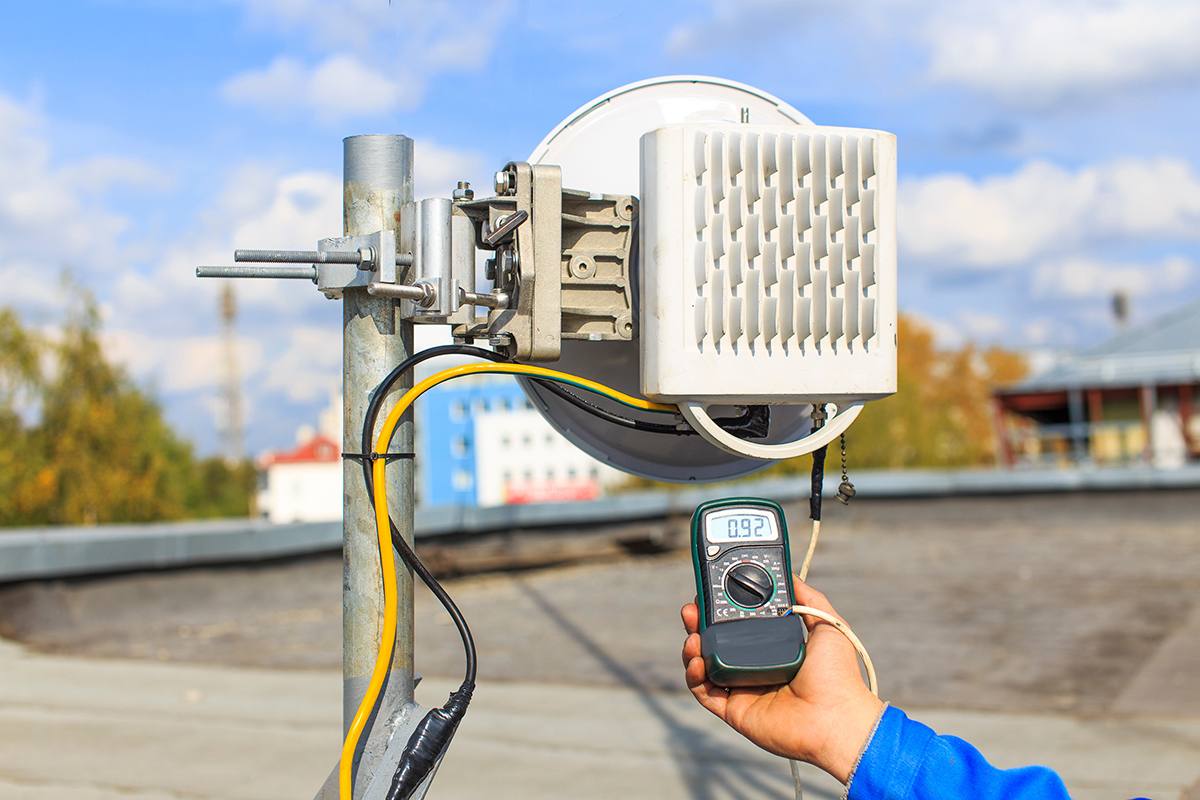
Our technicians perform on-site testing using calibrated equipment to measure signal strength at each grid point. We collect data systematically to ensure results are accurate and defensible.
Data Analysis and Review
Once testing is complete, we analyze the results to identify coverage strengths, weaknesses, and any areas that fall below required thresholds.
Reporting and Documentation
We provide clear documentation and reporting that can be submitted to the AHJ or fire marshal. This report outlines test methods, results, and pass or fail determinations.
Our goal is not just to test, but to provide actionable information that supports compliance and next steps.
Texas RF Grid Testing Requirements and AHJ Expectations
In Texas, RF grid testing requirements are enforced by local AHJs, typically fire marshals or fire departments. While the underlying fire code standards may be similar across jurisdictions, enforcement and documentation expectations can vary. AHJs commonly expect:
- RF grid testing performed by qualified professionals
- Testing conducted using approved frequencies and radio systems
- Documentation that clearly shows test locations and results
- Evidence that required signal strength thresholds are met
- Clear reporting that supports inspection review
Some jurisdictions may require retesting after construction changes, while others may request additional clarification if results are borderline. Understanding these expectations is critical to avoiding delays. RFE Communications works closely with AHJ requirements across Texas and helps ensure testing is performed correctly the first time.
Common Issues Identified During RF Grid Testing
RF grid testing often uncovers issues that building owners were not aware of. These problems are common, especially in larger or more complex structures. Some of the most frequent issues include:
- Signal dead zones in stairwells or interior corridors
- Insufficient signal strength in basements or parking garages
- Inconsistent coverage from floor to floor
- Interference from building materials or equipment
- Unexpected coverage loss in newly renovated areas
- Gaps in large open spaces like warehouses or ballrooms
Identifying these issues early is beneficial. It allows corrective action to be taken before inspections fail or occupancy is delayed.
How RF Grid Testing Supports ERRCS and BDA Planning
RF grid testing is a critical planning tool for ERRCS and BDA systems. When a building fails RF grid testing, the results help determine:
- Where coverage gaps exist
- Which areas require signal amplification
- How extensive a system design must be
- The most effective antenna placement strategy
For buildings with existing ERRCS or BDA systems, RF grid testing verifies whether the system is performing as intended. For buildings still in the planning stages, testing provides the data needed to design an efficient and compliant solution. At RFE Communications, our engineering team uses RF grid testing results to guide system design, optimization, and corrective action planning.

Schedule RF Grid Testing Services in Texas Today
RF grid testing is a critical step in ensuring compliance with public safety communications requirements. Whether you are preparing for an inspection, pursuing a certificate of occupancy, or planning next steps after a failed test, accurate and professional testing makes all the difference.
At RFE Communications, we provide RF grid testing services across Texas for buildings supporting various industries, including commercial buildings, industrial facilities, healthcare properties, hospitality venues, and public spaces. No matter the size or complexity of your building, we deliver accurate testing, clear reporting, and actionable insights that support compliance and next steps.
From testing to system design and implementation, our team is ready to help you move forward with confidence. Contact RFE Communications today to schedule RF grid testing services in Texas and ensure your building is ready for inspection, occupancy, and safe emergency response.
Frequently Asked Questions
How long does RF grid testing take?
Testing time depends on building size, number of floors, and complexity. Smaller buildings may be tested quickly, while large or multi-floor properties may require more time.
What determines pass or fail results?
Pass or fail is based on whether the required signal strength thresholds are met at the designated grid points. Requirements are set by fire codes and enforced by the AHJ.
What happens if my building fails RF grid testing?
If a building fails, corrective action is typically required. This often involves installing or modifying an ERRCS testing or BDA system and retesting.
Does RF grid testing disrupt building operations?
Testing is minimally invasive and can often be coordinated around building use. We work to reduce disruption whenever possible.
Is RF grid testing required after renovations?
In many cases, yes. Renovations can change signal performance, which may trigger retesting requirements.
Can RFE Communications help after testing?
Yes. We provide end-to-end support, including testing, system design, installation, and follow-up testing if needed.