
Why Buildings Need BDA Systems
Concrete, steel and energy-efficient glass are great for buildings, but they block radio signals. That’s why firefighters and police often lose contact in stairwells, basements and parking garages, right where they may need their radios most.
To fix this, most fire codes now require new buildings to have reliable emergency radio coverage inside. When the outside signal can’t reach every floor, a bi-directional amplifier (BDA) system brings it in and spreads it throughout the building, so first responders can talk to each other wherever they are.
At RFE Communications, we design BDA systems around your building: its size, its construction and what your local fire marshal requires. The result is coverage that works when it matters and a system that passes inspection.


Why Work With RFE Communications?
- Real experience: Our team has designed and installed BDA systems in hospitals, schools, stadiums and large manufacturing plants. We know how different buildings behave, and we design around that.
- Licensed and code-focused: Our team holds FCC General Radiotelephone Operator Licenses (GROL), and every design follows the codes fire marshals enforce, including IFC Section 510 and NFPA standards.
- One team, start to finish: We handle the grid test, design, equipment, installation and acceptance testing, so you have one point of contact and no finger-pointing between contractors.
- Built for your building: No two buildings are alike. We size each system to your floor plan, construction and local requirements, so you get the coverage you need without paying for more than you need.
- Here after installation: Annual inspections, repairs and upgrades keep your system working and compliant long after it’s switched on.
BDA System Design Process
Site Evaluation and Grid Testing
We start with a visit to your building. Our technicians run an RF grid test to measure the public safety radio signal on every floor, review your plans, and talk through your schedule and what your local fire marshal requires. You’ll know exactly where coverage falls short before any design work begins.
BDA System Design
Using your test results, our engineers model your building in iBwave design software. We plan where each antenna goes and how much amplification you need, based on your floor plan and construction materials, so the system covers every required area without over-building it.
Equipment Selection
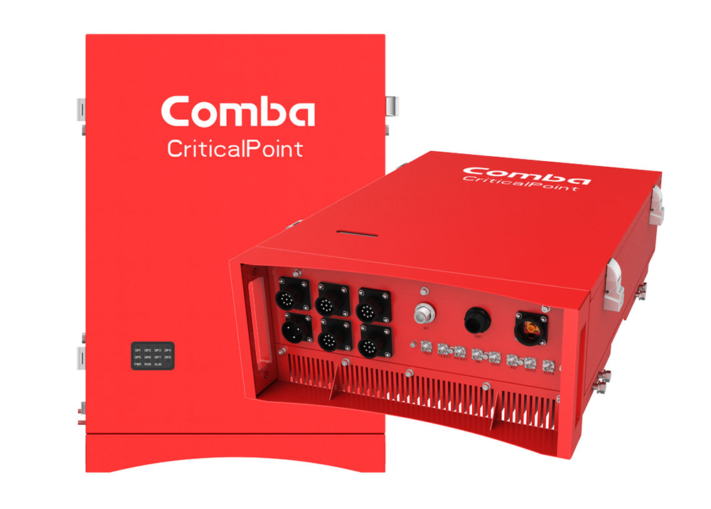
As a distributor for leading manufacturers like ADRF, Comba and Westell, we choose the equipment that fits your building and budget, not just whatever’s on the shelf. Every component is selected for code compliance, compatibility with your local public safety radio system, and long-term reliability.
Installation and Integration
Our technicians install your BDA system, including the donor antenna, amplifier, cabling and indoor antennas, and connect it to your fire alarm system for monitoring. We work around your construction schedule or building operations to keep disruption to a minimum.
Testing and Commissioning
Once the system is live, we test coverage across every floor, with extra attention to critical areas like stairwells, elevator lobbies and fire command rooms. We document the results and walk through the acceptance test with your fire marshal, so you can close out the project and move toward your certificate of occupancy.
Maintenance and Support
Most fire codes require BDA systems to be tested every year. Our annual inspections cover coverage testing, amplifier and battery checks, and a report for your fire marshal. If anything ever needs attention, we handle the repair.
What Poor Signal Strength Costs Your Building
Weak signal inside a building affects everyone in it, from first responders to tenants and staff. Here’s where it usually shows up:
- Radios that cut out in an emergency: When firefighters can’t reach each other in a stairwell or basement, it slows the response and puts lives at risk. It can also mean a failed fire inspection and a delayed certificate of occupancy.
- Dropped and missed calls: Choppy, dropped calls frustrate employees and customers, and a missed call can mean a missed sale.
- Lost time: Staff end up walking to a window or stepping outside just to make a call or send a file.
- Unhappy tenants: In offices, apartments and hotels, poor cell coverage is one of the first complaints people make, and it affects how long they stay.
The good news: both problems can be fixed. A grid test shows exactly where signal is weak, and a BDA system solves it for emergency radios, while a commercial cell booster does the same for phones.
Why a Professionally Designed BDA System Pays Off
A BDA system is only as good as its design. When it’s done right from the start, you get:
- Coverage where it counts: Reliable radio signal in stairwells, basements, parking garages and other areas where signals usually drop, so first responders can communicate anywhere in your building.
- A smooth inspection: A system designed to meet IFC Section 510 and your local fire code passes acceptance testing the first time, without costly rework or delays to your certificate of occupancy.
- The right size, the right cost: Good design avoids both weak spots and unnecessary equipment, so you pay for what your building actually needs.
- Room to grow: A well-planned system can be expanded or upgraded as your building changes, instead of being replaced.
- Peace of mind: Meeting public safety communication requirements protects your occupants, and it helps protect your business from liability if something goes wrong.

Two-Way Radio, Cellular, or Both
Most buildings with poor emergency radio coverage have weak cell signal too. The same walls, concrete and glass block both. We can fix one or both, depending on what your building needs.
For emergency radios, a public safety BDA system gives firefighters, police and EMS reliable coverage throughout your building. For phones, a cellular DAS (distributed antenna system) brings strong signal to employees, tenants and visitors across all major carriers.
If you need both, planning them together saves time and money. Where your fire marshal allows, the two systems can share cable routes, installation work and project management. Where codes require them to be separate, we design each one to meet its own requirements. Either way, one team handles the whole project.
Codes, Permits and Licensing
A BDA system has to satisfy your fire marshal, your building department and the FCC, and we design with all three in mind. Every system we design follows IFC Section 510, the NFPA standards your jurisdiction has adopted, and FCC rules for public safety signal boosters, including using FCC-certified equipment and getting permission from the radio system’s operator before going live.
We also handle the paperwork: design documents for your permit application, acceptance test reports for your final inspection, and the documentation your fire marshal needs to sign off before your certificate of occupancy is issued. After that, our annual inspections keep your system compliant, and support any operating permits your city requires you to renew.


Keeping First Responders Connected
When there’s a fire or medical emergency in your building, firefighters, police and EMS rely on their radios to coordinate, call for help and get everyone out safely. If those radios go silent in a stairwell or basement, every second counts.
A BDA system keeps first responder communications working throughout your building. We design each system around the radio network your local agencies actually use, whether that’s 700/800 MHz, VHF or UHF, so their radios work inside just as well as they do on the street. Regular coverage testing confirms it stays that way.

Buildings We Design BDA Systems For
If first responders need their radios inside, we can help.
- Hospitals
- Schools
- Hotels
- Retail centers
- Warehouses
- Industrial sites
- Data centers
- Self-storage
- Government buildings
- Offices and high-rises
- Apartments and condos
- Stadiums and venues
Don’t see yours? Tell us about your project.
When Is a Bi-Directional Amplifier Necessary?
If you oversee or own a substantial commercial property, you may encounter areas with weak or nonexistent signals, particularly in difficult-to-access locations. This is where a bi-directional amplifier becomes beneficial. While a two-way radio repeater could suffice for smaller areas, larger edifices necessitate a Distributed Antenna System (DAS) design that incorporates bi-directional amplifiers. We specialize in crafting personalized communication solutions for expansive commercial premises. We offer a comprehensive suite of services, including assessment, analysis, strategizing, implementation, and testing of communication systems to guarantee seamless coverage throughout your property. We adhere to local building codes and Emergency Responders Radio Coverage (ERRC) regulations to furnish you with a solution that caters to your precise needs. Rely on us to develop the most dependable communication system for your commercial building.
Contact Us for BDA System Design Services Nationwide
RFE Communications specializes in BDA system design, offering comprehensive services to improve your communication infrastructure. Whether you’re looking to improve 2-way radio communications or cell signal strength, our team of experts is ready to provide tailored solutions that enhance signal strength, ensure clearer phone calls, and maintain reliable connections nationwide. Let us help you overcome the challenges of weak signals and poor cell reception.
Our Other Communication Solutions
In addition to our BDA system design services, RFE Communications offers a variety of solutions to meet your communication needs:
- Commercial Cell Boosters
- Emergency Responder Radio Coverage Systems (ERRCS)
- Emergency Responder Coverage Enhancement Systems (ERCES)
- Bi-Directional Amplifier (BDA) System Installation
- IBwave Design
- Wireless Grid Testing
For comprehensive communication enhancement services across the nation, contact RFE Communications. Our team is dedicated to connecting you with the right solutions to keep your operations running smoothly and efficiently.
FAQ
What is a Bi-Directional Amplifier system, and when do I need it?
A Bi-Directional Amplifier system is a signal-boosting solution used to enhance coverage in buildings for public safety radios. Large commercial buildings, such as hospitals, schools, sports arenas, and manufacturing plants, often require a system installation, including Distributed Antenna Systems (DAS), to comply with local building codes or Emergency Responders Radio Coverage (ERRC) code.
What exactly is a Bi-Directional Amplifier (BDA) system?
A Bi-Directional Amplifier (BDA) system is a device that captures and amplifies signals for two-way radios or cellular devices to ensure reliable communication within buildings. It is especially beneficial in larger structures where signals can be weakened due to distance, building materials, or interference.
Why is a BDA system necessary for my building?
A BDA system enhances the signal strength of emergency communication devices in your building, ensuring clear and reliable communication at all times. This can be particularly crucial in an emergency, where effective communication can save lives. Furthermore, many localities require BDA systems in large buildings to meet building codes and Emergency Responders Radio Coverage (ERRC) code compliance.
How does a BDA system enhance communication within my building?
A BDA system boosts the signal strength for two-way radios or cellular devices, which can often be weakened by factors such as building size, materials, and layout. By amplifying these signals, the BDA system ensures effective communication even in hard-to-reach areas within your building.
Does my building size or structure impact the BDA system design?
Yes, the size and structure of your building play a significant role in the BDA system design. Larger buildings with more walls, floors, and barriers often require a more comprehensive system to ensure complete coverage. The building’s structure, including the materials used in its construction, can also impact signal strength and thus influence the design of the BDA system.